
Series: how Facebook scams trap internet users
Episode 1: fake news articles on Facebook — the example of fake “lesoir.be” articles
Facebook has become a prime target for many online scams: fake ads, fake news articles, brand impersonation, fake contests, and promises of quick profits.
Through this series of articles, we will analyze the most common scams, explain the mechanisms used to deceive internet users, and share the right reflexes to adopt before clicking, signing up, or sharing personal information.

In this first episode, we will discuss an increasingly common scam on Facebook: fake ads that redirect users to fake news articles.
The principle is simple, but very effective. The user sees a sponsored post that appears to come from a well-known media outlet, such as Le Soir. The visual, the headline, the layout, and sometimes even the comments are designed to give the impression of a real news article.
Everything is done to inspire trust: the use of a well-known logo, a journalistic tone, a photo of a public figure, a fake publication date, a fake author name, or an appearance close to that of a recognized news website.
The goal is to push the user to click without suspicion, by giving them the impression that they are reading serious information published by a reliable media outlet.
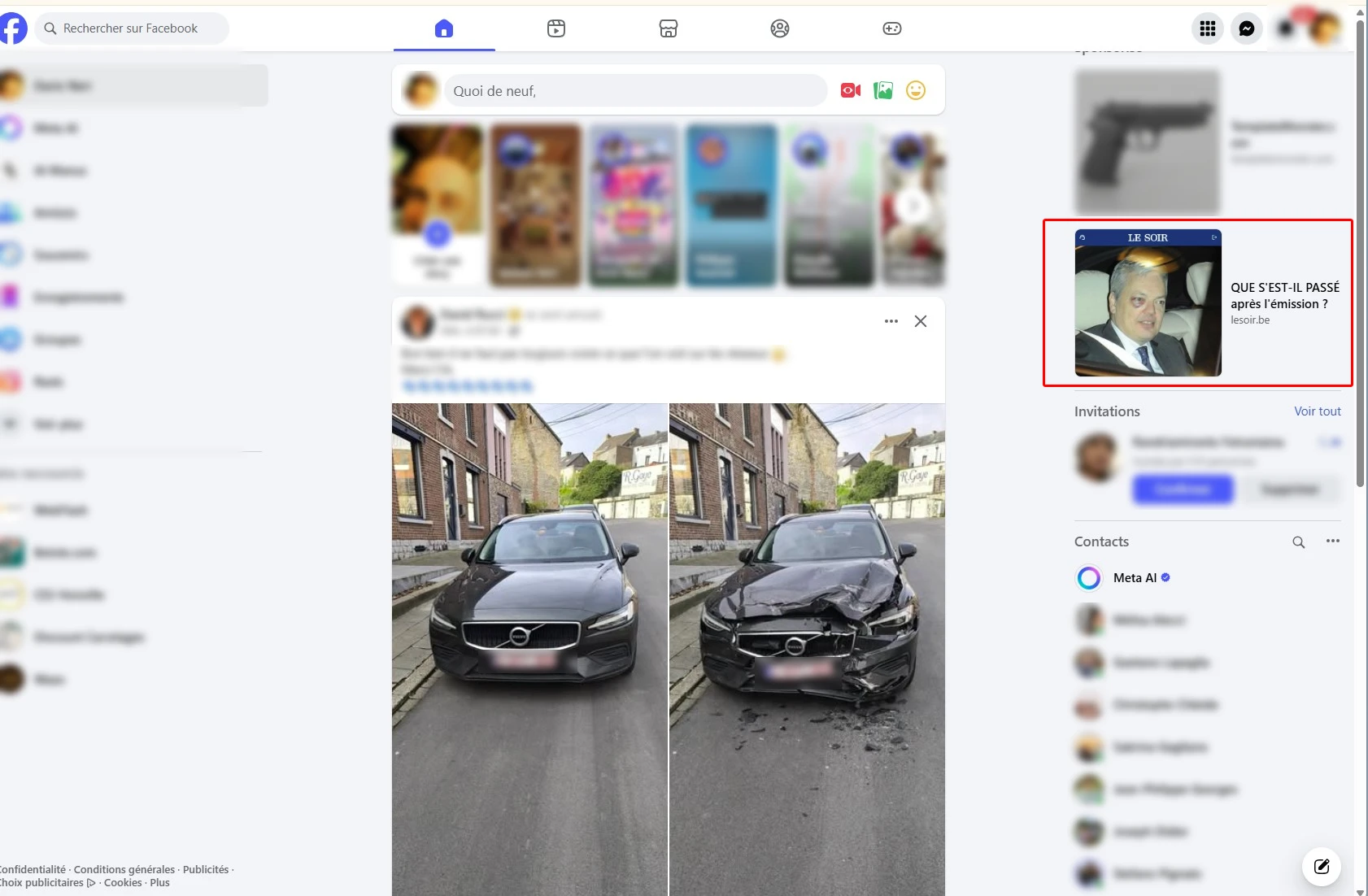

When clicking on the link, the user is redirected to a fake website that imitates the appearance of a recognized media outlet. In the example presented, the page uses the visual codes of a news article, but the website address does not match the real domain of the media outlet.
The purpose of this scam is generally to make the user believe that they can take part in a major investment opportunity, often presented as exclusive, limited, or reserved for only a few people. The content promises quick profits, sometimes very high, while suggesting that well-known public figures, journalists, or political leaders endorse this opportunity.
In reality, this is neither a real article nor a genuine investment. The goal is often to push the person to register on a fake platform, leave their contact details, or make a first payment. Once the information has been submitted, the fraudsters can contact the victim again, put pressure on them, and encourage them to invest more money.
The first reflex to have is therefore to check the website URL. Even if the page looks like a well-known media outlet, the website address may reveal the scam. In the case of Le Soir, a real page from the media outlet must use the official domain: lesoir.be
If the address contains another domain name, a strange name, or a variation that does not exactly match the official website, the page should be considered suspicious.